


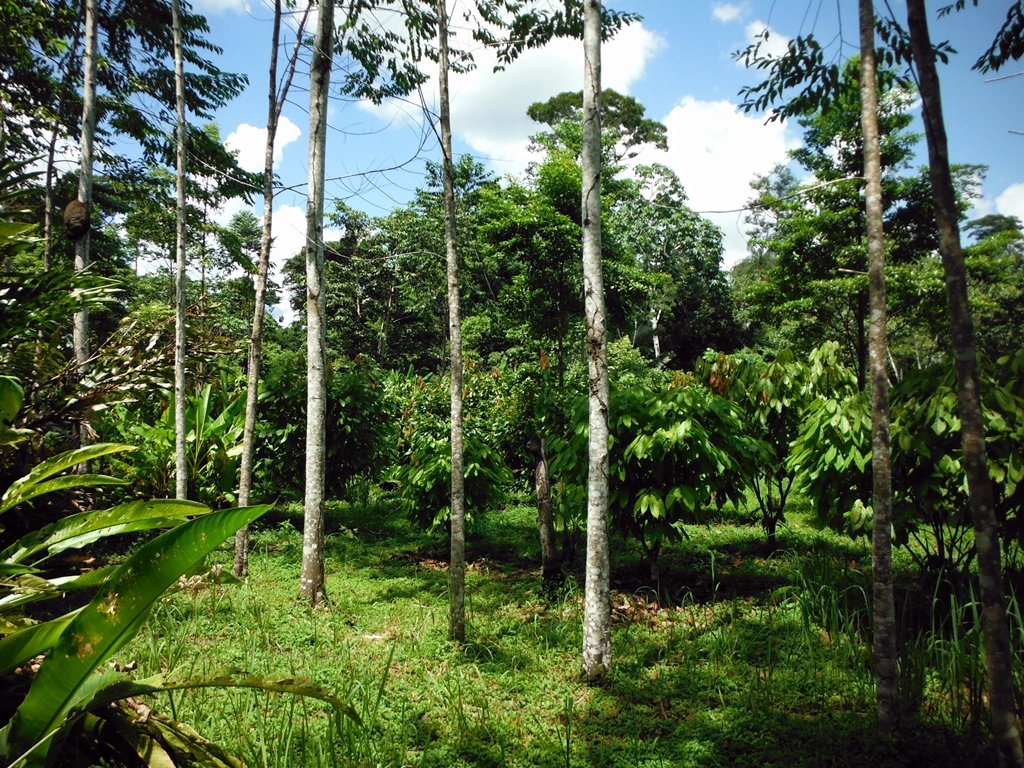

The tree reaches 35 m in height and 50 cm in diameter. Flat or parasoled crown on the upper third.
The Bolaina tree (Guazuma crinita) is a fast-growing tree species native to the Amazon region of Peru 1. The tree is known for its high economic value and is an important source of income for local producers 1. The Bolaina tree is a pioneer species that colonizes forest holes and agricultural land through wind dispersal of its small seed capsules at the beginning of the rainy season 1. The tree is suitable for sustainable forestry and wood production, as well as marketing of sustainably produced wood from small-scale forestry.
1. Wood use: Bolaina wood is light and often used in construction and other carpentry. It is used to make furniture, wooden tools and plywood.
2. Traditional medicine: In some regions, parts of the Bolaina tree, such as the bark, are used in traditional medicine. It is believed to have properties that may be beneficial for various health purposes.
3. Agroforestry: Bolaina trees are sometimes planted in agroforestry systems where they can provide shade, improve soil fertility and offer wood resources. This is a sustainable approach to land use that combines agriculture and forestry.